Do core frugivores disperse more seeds than peripheral species?
Submitted by editor on 8 September 2015.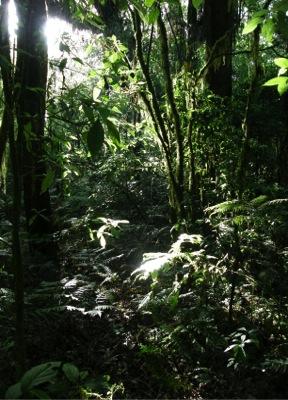 Get the paper!
Frugivores and fleshy-fruited plants can interact with a mutual benefit: animals obtain nutrients from fruits and plants disperse their seeds to variable distances through bird faeces.

It has been largely assumed that only a few of the many species interacting are the responsible for the major ecological and evolutionary effects on their counterparts. Even when the importance of such core species can be easily noticed, this assumption has not been empirically tested, in part due to the lack of a unique, incontrovertible method for core species determination in mutualistic networks. In our recently accepted contribution to Oikos we start to fill this gap by studying frugivorous bird-fleshy-fruited plant interaction networks in 10 sites of a subtropical Andean forest from NW Argentina.

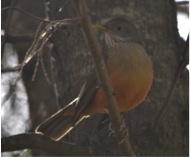
We searched for fruit consumption events made by birds mainly through direct observations and applied a recently developed method to detect core-periphery structures in interaction networks. We recorded 3579 interactions between 52 bird and 69 plant species; only 8 bird and 15 plant species were identified as core in the whole study area. Core birds employed different techniques to consume fruits and not always swallowed the whole fruit. Beyond this, they had a higher quantitative component of the effectiveness with which they dispersed seeds, this means they ate more fruits and swallowed more seeds, than peripheral bird species. Future studies should elucidate if this difference between core and peripheral species is also found in the qualitative component, which includes the seed treatment inside the mouth and gut of dispersers and the microsites of seed deposition.
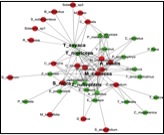

To sum up, we empirically demonstrate for the first time that seed dispersal networks at a regional scale have a small core set of fruit-eating birds, upon which heavily rely most fleshy-fruited plants for their seed removal. Hence, the activity of just a few core frugivores could deeply impact the demography of an entire assemblage of fleshy-fruited plants. The results revealed in our study could also be very useful for forest conservation and restoration plans. If efforts are primarily focused on the few, most effective core seed dispersers and their interactions, we could foster positive impacts on the remaining species building up local and regional networks.
Román A. Ruggera, Pedro G. Blendinger, M. Daniela Gomez and Charlie Marshak
Categories:
Insights into Oikos papers