Control of large carnivores could backfire if mesopredators are released
Submitted by editor on 6 March 2015.
Humans cull large carnivore populations in areas around the world to reduce predation on wild and domestic ungulates. However, medium-sized ungulates such as sheep and deer are often preyed upon by smaller predators such as coyotes and lynx as well. Suppression of large carnivores can lead to increased populations of smaller predators, a phenomenon known as “mesopredator release.” If mesopredator release is strong enough, control of large carnivores could backfire and lead to increased predation on ungulates.
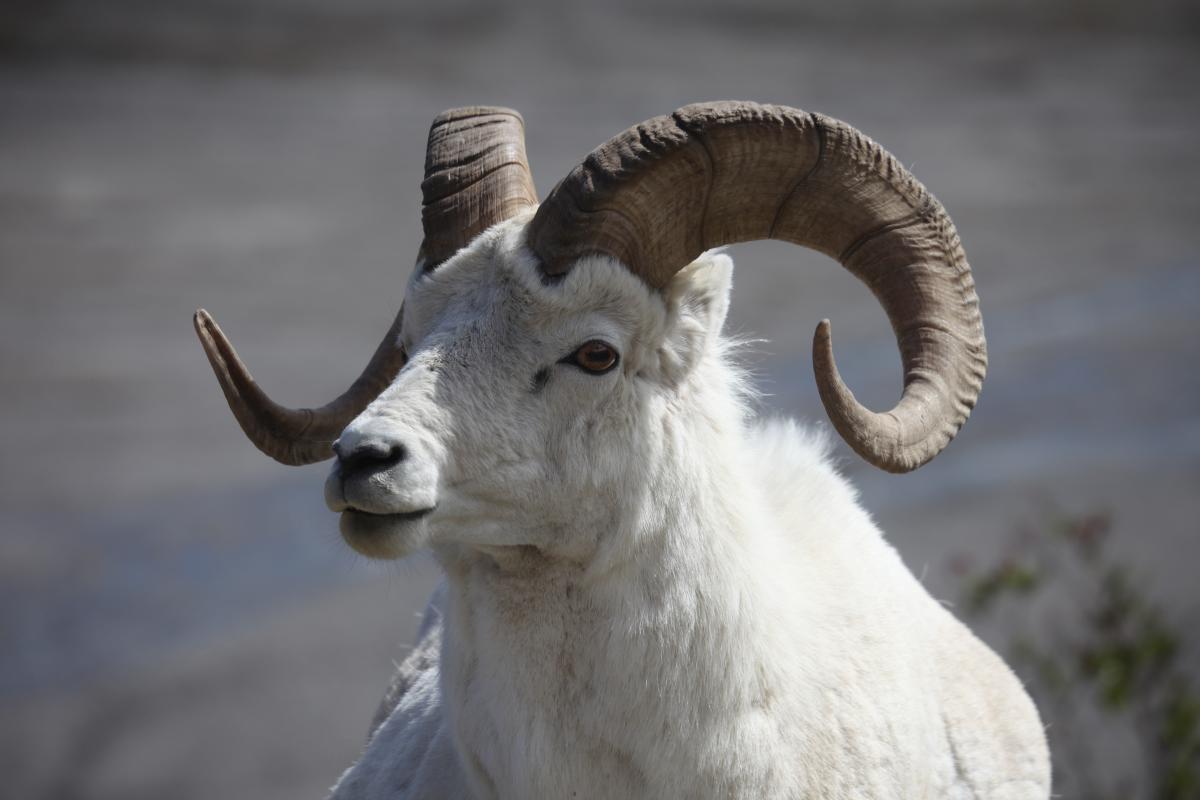
In our paper "Optimal predator management for mountain sheep conservation depends on the strength of mesopredator release", now published Early View in Oikos, we used radio-collaring and population modeling to predict the effect of wolf control on Dall sheep populations in Alaska. Wolf populations are reduced by 50-80% on >16 million hectares in Alaska to increase harvest of moose and caribou by humans, but the impact of wolf control on Dall sheep has not been examined. We radio-collared coyotes and Dall sheep lambs and ewes in an area without wolf control, and we found that wolves were the main cause of death for coyotes and ewes, and coyotes were the main cause of death for lambs. We then used population models to simulate the effect of wolf control on Dall sheep, and we found that wolf control could result in either net increases or decreases in Dall sheep population growth, depending on how strongly coyote populations responded. We conclude that a better understanding of how large predators affect smaller ones is needed to effectively manage predators for ungulate conservation.

The authors through Laura Prugh
Categories:
GeneralInsights into Oikos papers