Cover March 2026
Submitted by editor on 11 March 2026.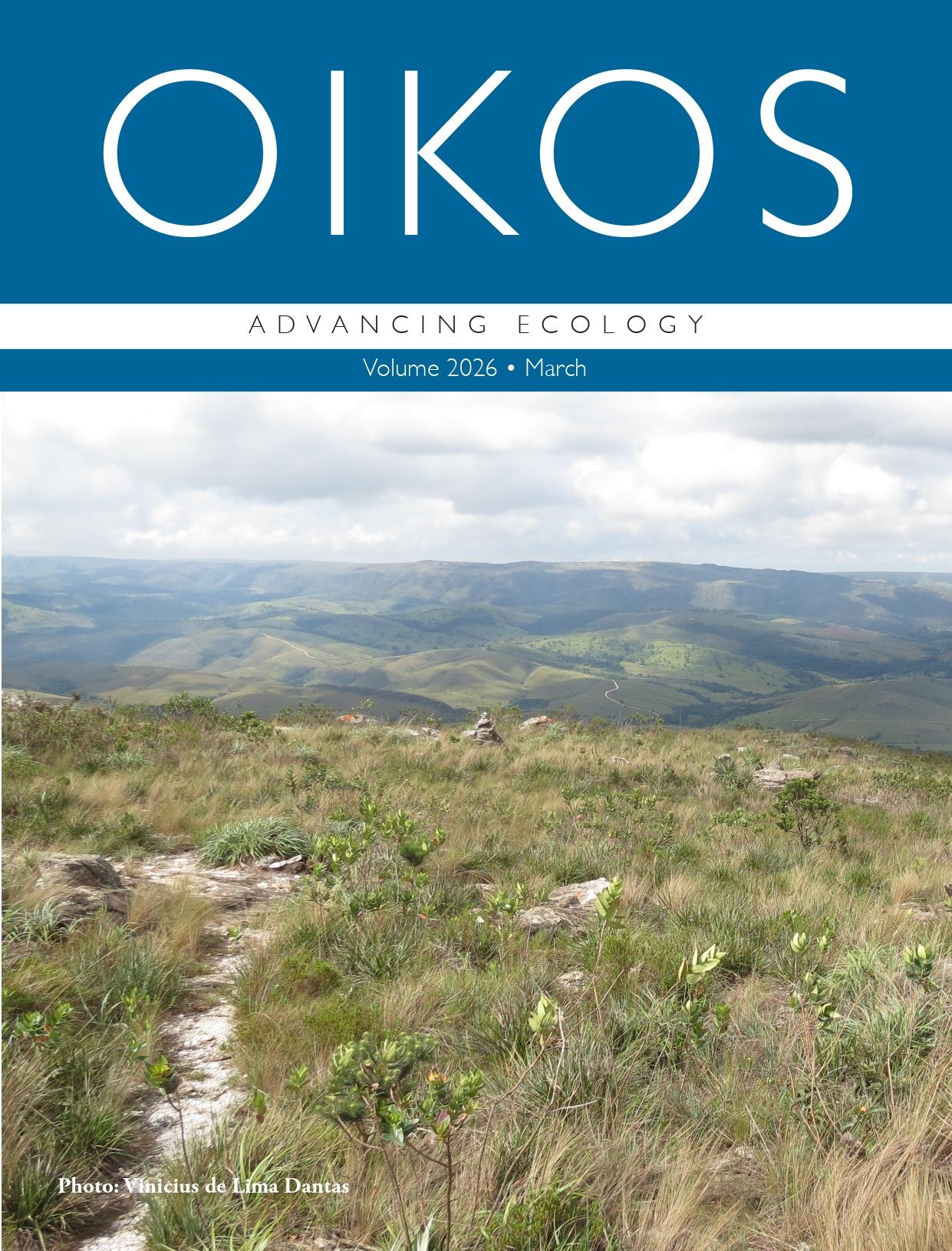 Get the paper!
A study of Brazilian savannas by Manzan et al. (2025) shows that fuel traits—especially grass biomass—strongly shape fire behavior, with vegetation structure and environmental conditions influencing flammability and helping predict where fires are most likely to occur.
Abstract: Fuel traits are important determinants of fire behavior and regime in savannas and, thus, of how fire affects plant communities. However, whether these traits are correlated, predictable and how they are influenced by biotic and abiotic drivers remain to be rigorously evaluated. We hypothesized that, given their overall dependence on grass biomass, fuel traits were mutually correlated (via correlations to grass biomass), change predictably in space and time, and that they influence fire regimes. We sampled 31 plots distributed in five soil classes in a savanna-dominated landscape in Brazil and measured the following surface fuel traits: fuel height, continuity, bulk density, bed flammability, composition, total load and grass load. We also obtained data on landscape predictors, such as soil clay content, fire history, climate, canopy cover, elevation, and on future (post-sampling) fire incidence. We used Pearson correlation and principal component analyses to test for associations among fuel traits, and generalized linear model for assessing 1) landscape predictors effects on fuel traits; and 2) fuel trait effects on future fire incidence. We found two leading axes of fuel trait variability. The first axis was positively correlated with fuel height, continuity, total load, bed flammability, grass load and cover. In this axis, flammability increased with time since last fire and clay content and decreased with canopy cover and rainfall seasonality. The second axis was positively correlated with fuel bulk density, continuity, shrub and litter covers, and negatively with fuel bed flammability. In this axis, flammability decreased with canopy cover and clay content. Grass fuel load was the best predictor of future fire incidence. Our results suggest that fuel traits change predictably in space and time and explain variability in fire regimes in savannas. These findings contribute to a better understanding of fire regimes while providing important information for managers and decision makers.
Categories:
General