Will the Superplant evolve?
Submitted by editor on 18 August 2015.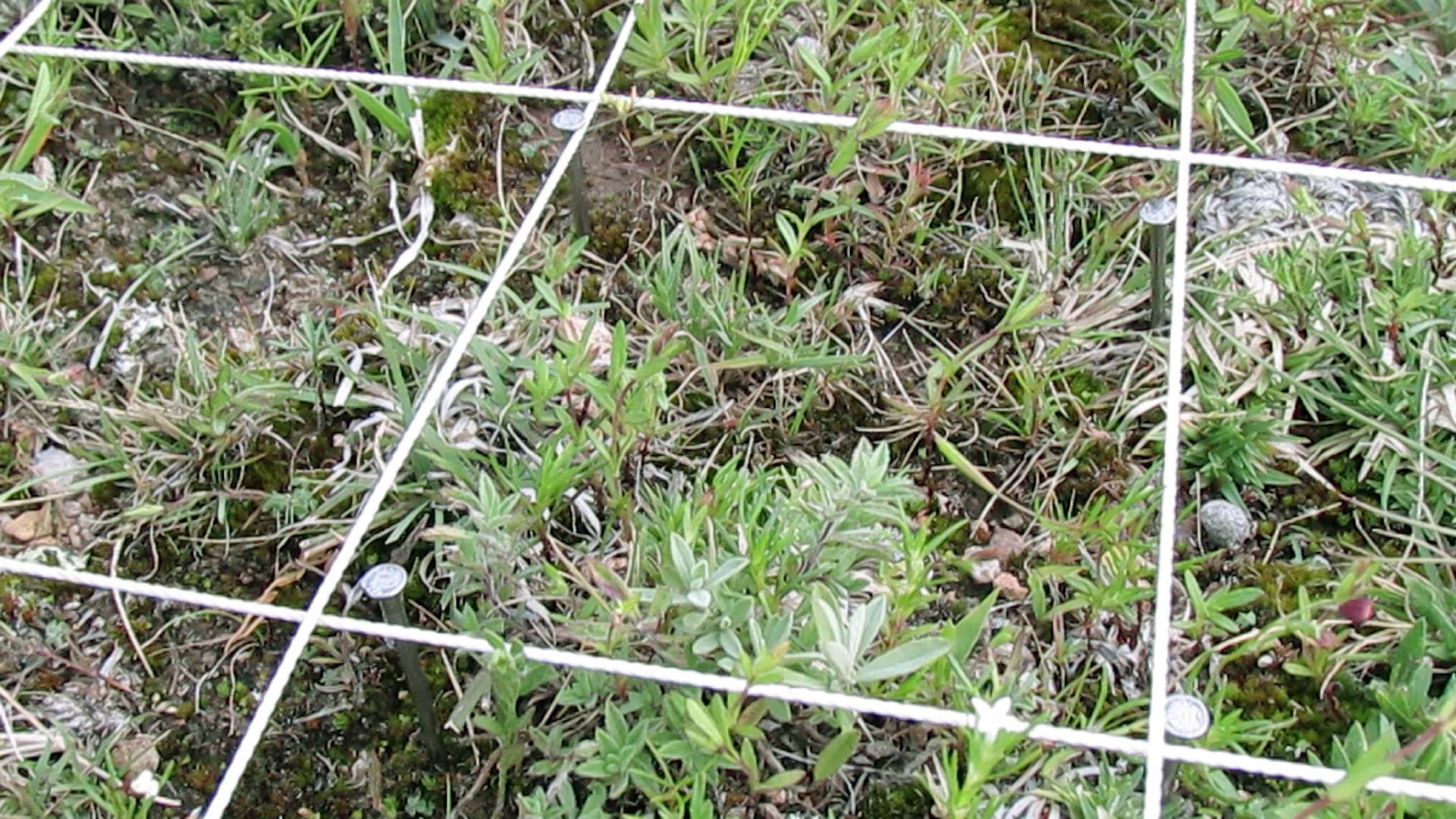 Get the paper!
What would happen if a plant could produce billions of seeds capable of arriving, germinating and growing anywhere? Such plant would coat the face of the Earth, displacing every other plant species on the planet. From the assumptions of natural selection, we would even expect this to happen. Why do we observe otherwise? An answer to this paradox may be related to the delicate balance between the production and dispersal of seeds (seed limitation) and the ability to germinate and grow anywhere (microsite limitation). If a reduction in one of these limitations implies an increase in the other, a super-plant that is not limited cannot evolve. In our paper “A trade off in the absolute magnitudes of seed and microsite limitations and their effects on population regulation”, we tested this idea in a field experiment involving 14 species of herbs from a semiarid grassland. To do so, we developed methods to measure the absolute magnitudes of both limitations rather than their intensities relative to each other, as has previously been done. Our analyses show that, over evolutionary time, plants face the dilemma of reducing one limitation at the cost of augmenting the other, which then becomes the main constraint to population growth. Thus, the observed trade-off and in the intensity with which limitations act upon plant populations may contribute to keeping the world not uniform green, but rather the colorful planet that we love to watch and study.
Categories:
General