Mistletoe network
Submitted by drupaladmin on 12 October 2012.Isn't it often so that the most brilliant ideas come to us when our brains are "on holiday", thinking of something completely different. That was the case for Ray Blick. The idea of studying networks among mistletoes and their hosts, that came during along train journey across Australia, has now resulted in a paper in Oikos, that is now online: "Dominant network interactions are not correlated with resource availability: a case study using mistletoe host interactions" by Blick et al. Ray describes what happened:
All field scientists have their peculiarities. Botanists are typically found near their transportation, unable to get past nearby plants. Ornithologist can be found walking with their eyes closed and their ear to the wind (somehow avoiding all objects in their path). And Ecologists have a spectacular ability to chop-and-change direction like a drunken person driving a car at night. I fall into the last category, where slight ‘abnormalities’ in tree shape or colour will draw my attention - Mistletoe?


The idea for this research originated during a ‘forced’ 1100 km train-line transect on a 16 hour journey from Sydney to Broken Hill, New South Wales, Australia. During this time the train followed a precipitation gradient traversing urban/city parks, temperate and subtropical rainforests, a wheat belt, closed Eucalypt woodlands and finally open, inconsistent sclerophyllous vegetation. All of which contained a range of mistletoe species.
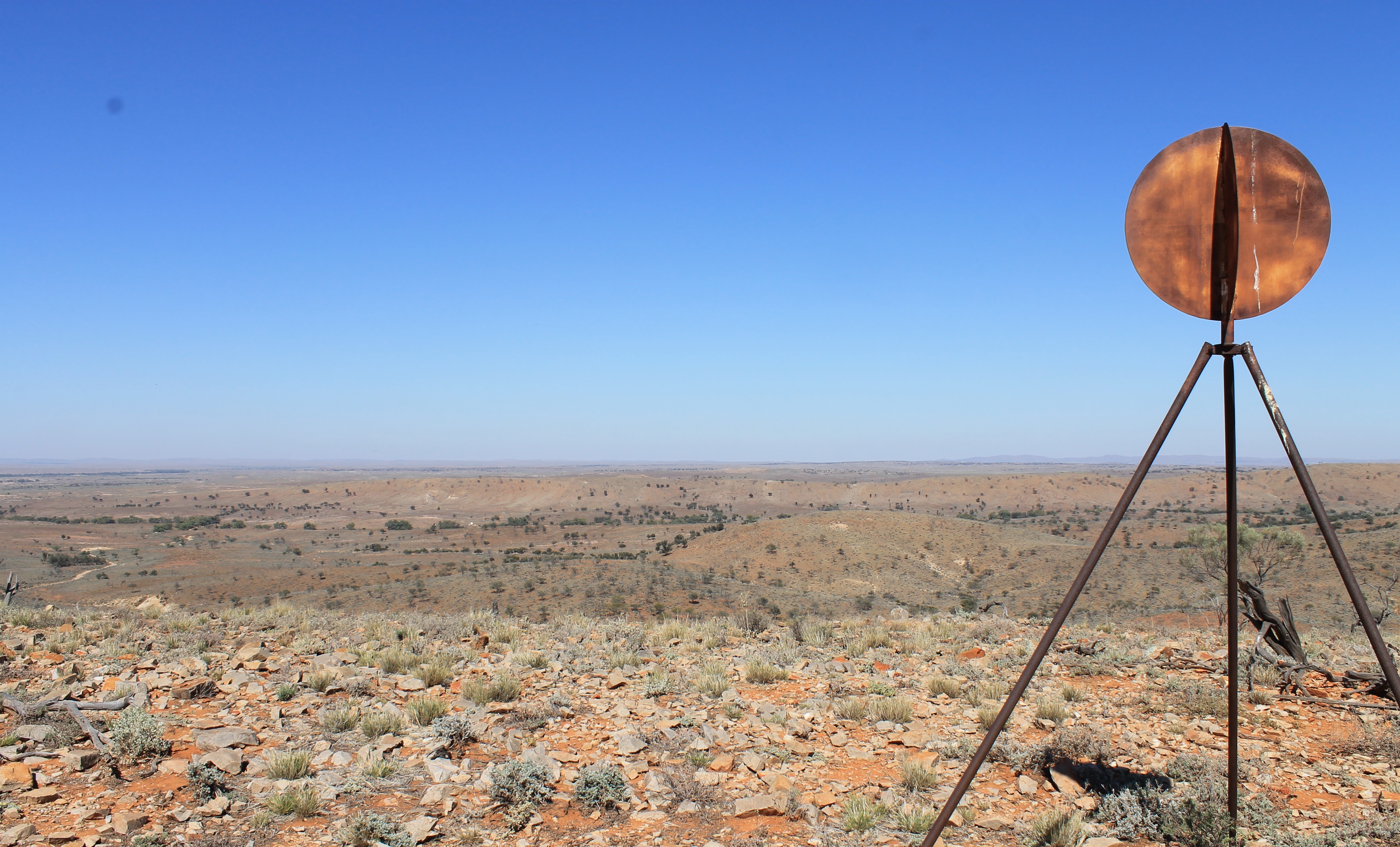
Unable to 'chop-and-change' from my N = 1, ocular sampling, holiday fixed-distance, train-line transect, with an expected sleep-deprived error bias, I became interested in testing the idea that the structure of an ecological community did not have to depend on commonness. The current manuscript addresses whether host-availability, or dominance, is an important factor structuring an ecological network between a parasite and its host.
Categories:
Announcements and events