editor
30 January 2017

We have the great pleasure to welcome Dr German Orizaola, Uppsala Univeristy to our Editorial Board. You can read more about German on his website www.gorizaola.wordpress.com and of course in myinterview with him below. What's you main research focus at the moment? My...
editor
9 September 2016

We are very happy to welcome Erik T Aschehoug from Louisiana State University in Baton Rouge. Get to know him on his website: http://aschehouglab.com/about.html and in my interview with him: What's your main research focus at the moment? Most of my work is focused on...
editor
30 August 2016
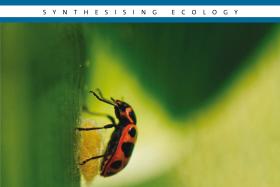
The cover for our September Issue comes from the study "Host nutritional status mediates degree of parasitoid virulence" by Fanny Maure et al. The photo shows a "Spotted lady beetle (Coleomegilla maculata) attending a newly emerged parasitoid larva on a maize plant in...
editor
5 July 2016
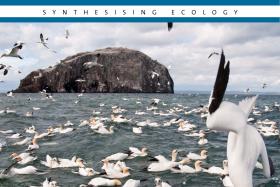
The photo on Oikos' July cover shows a group of Northern gannets (Morus bassanus) foraging near their breeding colony at Bass Rock (east coast of Scotland) and is taken by Richard Shucksmith (www.ecologicalphotography.co.uk) . This photo illustrates the study "Colony...
editor
24 May 2016

We now have the great pleasure to welcome Dr. Tadashi Fukami to Oikos Editorial Board. Below is a short interview with him and if you want to know more, just visit his webiste: http://web.stanford.edu/~fukamit/ What's you main research focus at the moment? I am...
editor
3 May 2016

The photo on Oikos' May cover, shows a well deserved break in fieldwork and is taken by Bess Hardwick. Fieldwork is performed for the study: Disentangling the ‘brown world’ faecal–detritus interaction web: dung beetle effects on soil microbial properties by Eleanore M...
editor
26 April 2016

The photo on the April cover is taken by Javier Valverde and relates to the paper: The temporal dimension in individual-based plant pollination networks , by Valverde et al. here's a short description of the photo: Unfocused in the background, a bee fly approaches to...
editor
11 March 2016

When submitting a manuscript to Oikos, it is now mandatory for the corresponding author to provide an ORCID ID along with the adress. ORCiD - Open Researcher and Controbutor ID - is a non-profit organization. Registration is free and takes only a few minutes. You do it...
editor
9 February 2016

The cover photo of the February Issue shows The Clauge River in the Chaux's forest (Jura, France). The Clauge comprised several forested headwater streams that go dry for 1-5 months during the summer period. However, the river harbours rich aquatic invertebrate...
On Feb 1st, Oikos, together with Nordic Society Oikos and Wiley arrange the Per Brink symposium: (Re)appreciating the role of life history in Eco-evolutionary dynamics? The symposium will be live streamed and and can be followed by the first 100 persons to sign up!...
Pages
