El Nino and density-dependent mortality in saplings
Submitted by editor on 13 October 2015.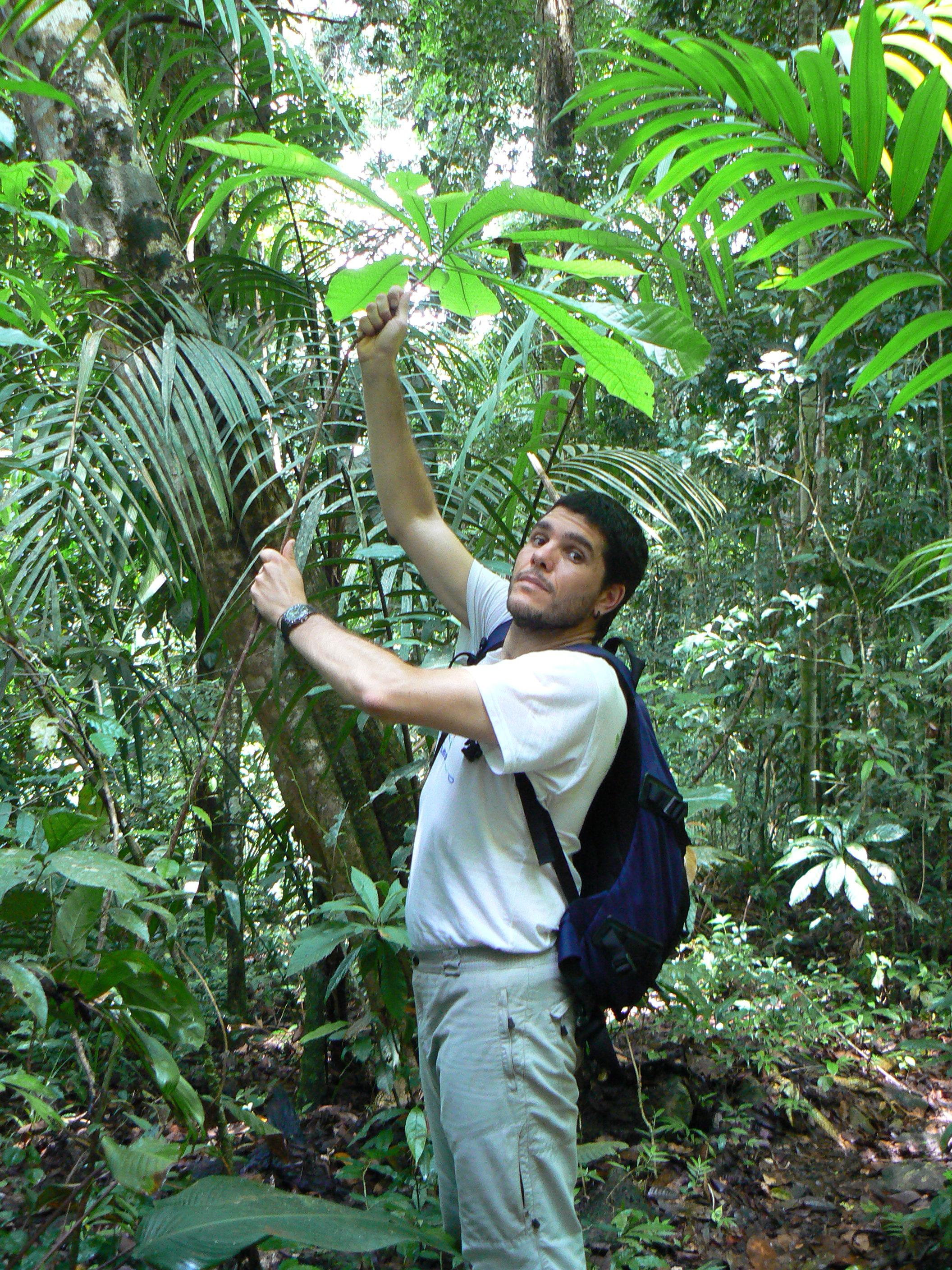 Get the paper!
Density-dependent mortality (DDM) has been identified as one of the processes allowing coexistence of hundreds of species in tropical forests. At the early stages of tree development, mortality occurs mainly within dense clumps of conspecific individuals as a consequence of the proliferation of species-specific herbivores and pests. This conspecific DDM affects mostly the abundant species, avoiding competitive exclusion of the rarest ones, which in turn increases species diversity in the community. Density-dependent mortality can also occur among all neighbours, not only of conspecifics, but in this case, the process will be mediated by competition for limiting resources, such as available light. This process has been mostly studied among seedlings (i.e. woody individuals < 1 cm diameter), but less among saplings (i.e. trees with a diameter of 1-4 cm) because, whereas DDM of seedlings may occur within a few months, that of saplings may take several years or even decades to become evident. Some previous studies, indicate that sapling mortality mostly involves total density-dependent effects.
In this article we assessed the occurrence and strength of DDM among saplings, in one of the few places of the world in which all woody individuals > 1 cm diameter have been mapped, measured and identified to species over more than two decades; the 50-ha forest dynamics plot of Barro Colorado Island (Panama). In this moist tropical forest we studied DDM among saplings over six inter-census periods (26 years), by using recent techniques of spatial point pattern analysis. We considered conspecific, but also total DDM upon saplings of all species, and on saplings of light-demanding and shade-tolerant ones, separately. As we hypothesized, conspecific density-dependent mortality affected a lower proportion of species than expected and its strength was not significantly related with species abundance. Conversely, the spatial signature of total density-dependent mortality was very clear. The strength of this process, however, showed pronounced temporal variation. For instance, the effects of density-dependent mortality among light-demanding saplings were particularly marked 10-15 years after the occurrence of unusually severe droughts associated with El Niño events.
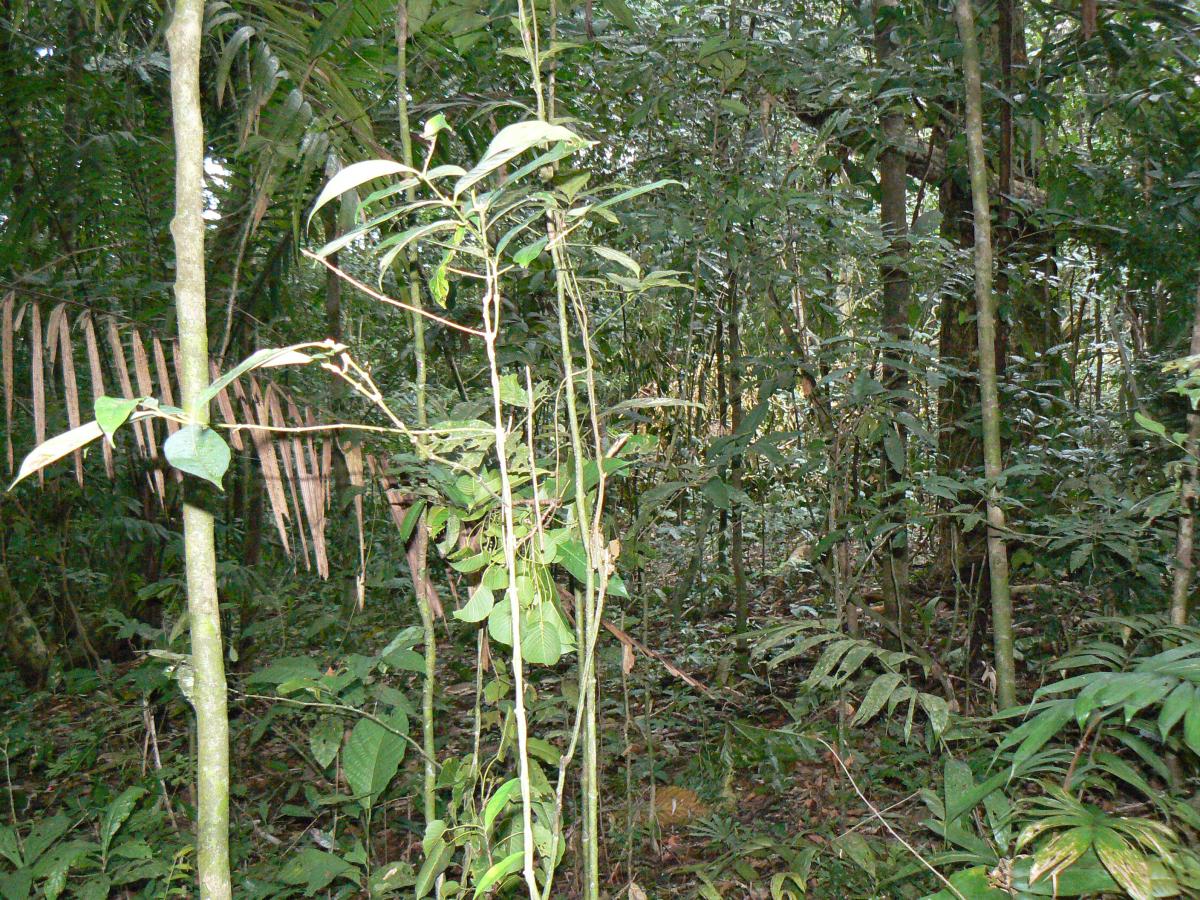
Saplings (woody individuals with 1-4 cm diameter) in the understory of the 50-ha Forest Dynamics Plot of Barro Colorado Island (Panama).
Our study indicates that, among saplings, conspecific DDM is relatively unimportant in comparison with total DDM, which has important ecological implications. At the seedling-to-sapling transition, this process occurs among conspecific individuals and is of vital importance with regard to fostering species coexistence in tropical forests. However, at the sapling-to-adult transition, it is largely random in relation to species and its occurrence is not so critical in the regulation of species diversity. The pronounced temporal variations observed in the occurrence and strength of total DDM among saplings indicate that this proves might be driven by time-varying events associated with climatic disturbances such as canopy openings or episodes of high recruit emergence. Based on our results, and considering that the frequency and intensity of El Niño events is predicted to increase during the coming decades, we predict that the moist tropical forests of the Panama isthmus, would undergo an acceleration of gap-phase regeneration processes (Lobo and Dalling 2014), with sharp emergence of new recruits, and faster growth and mortality of the existing saplings through total density dependent effects. These mechanisms would also increase the importance of niche differentiation processes, seriously affecting forest structure and function. Our study emphasizes the importance of considering time frames longer than one decade to study density-dependent effects among saplings, and therefore, of continuing long-term monitoring of tropical forests all over the world in other to advance our understanding on these ecosystems and the threats they are facing.
The authors through Eduardo Velazquez
Photo 2. The first author, together with a sapling individual of Alseis blackiana. Saplings can be extremely variable in height and experience asymmetric competition for available light.
Categories:
Insights into Oikos papers