Apex predators on coral reefs
Submitted by editor on 8 April 2014.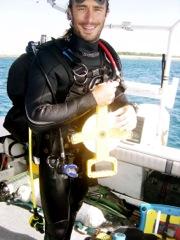
Apex predators are large carnivores that occupy the top trophic level of food webs. Globally, apex predators are assailed by disturbances such as persecution by humans. This is worrisome because changes in the density and distribution of apex predators can exert strong direct and indirect ecological effects that cascade through an entire ecosystem. However, our knowledge of these indirect ecological effects is still limited, particularly in marine environments. Coral reefs are one of the most diverse ecosystems, providing a useful model system for investigating the ecological role of apex predators and their indirect influence on lower trophic levels. In our work “Not worth the risk: apex predators suppress herbivory on coral reefs”, conducted on Lizard Island in the Great Barrier Reef (Fig. 1), we examined the indirect effects of two species of apex predators, a reef shark and large-bodied coral-grouper, on herbivore foraging we behaviour.
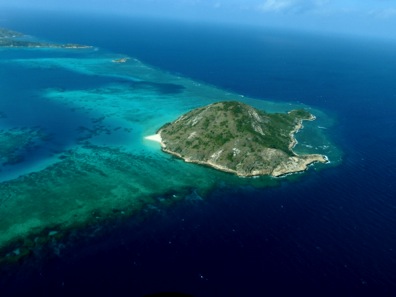 Figure 1. Location of study site
Using a novel approach of mimic predator models (Fig. 2) and GoPro video cameras we show that in the presence of an apex predator there is an almost localized cessation of algae consumption, due to the perceived risk of predation. Our work suggests that the indirect behavioural effects of apex predators on the foraging behaviour of herbivores may have flow-on effects on the functioning of coral reef ecosystems. This highlights that the ecological interactions and processes that contribute to ecosystem resilience may be more complex than previously understood.
 Figure 2. Apex predator models. (a) Blacktip reef shark, (b) large coral-grouper and (c) small coral-grouper.
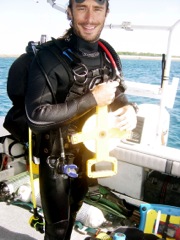
Picture below is of lead author Justin R. Rizzari (website: http://www.coralcoe.org.au/students/justin-rizzari)
Categories:
General