Climate change or competition most important for population dynamics?
Submitted by editor on 12 February 2015.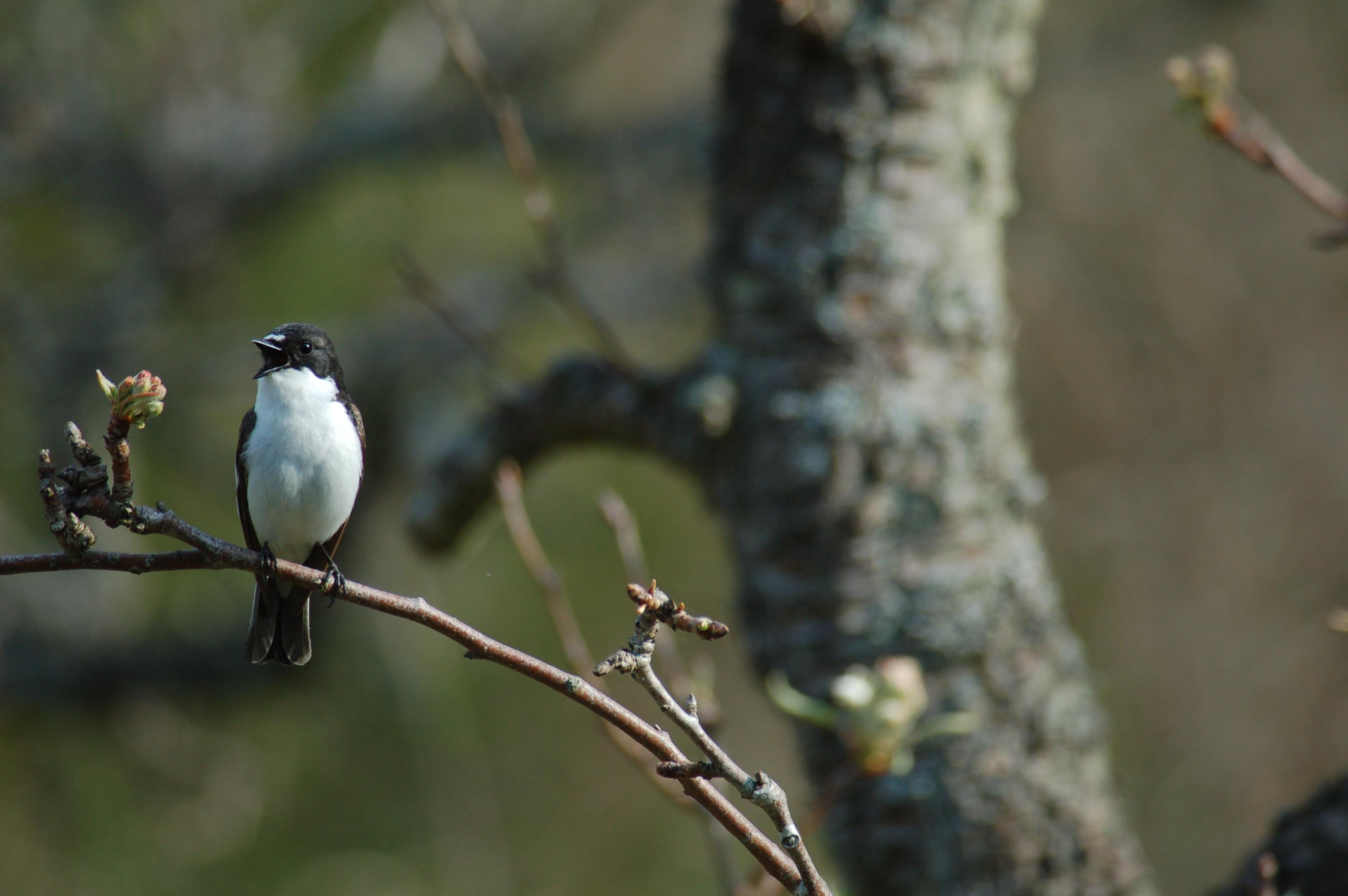
It is usually delightful to observe forest birds as they playfully hop from branch to branch chirping, or sing their hearts out. But there is a dark side to a birds’ behaviour that is less often acknowledged. Many birds engage in a fierce (and often fatal) struggle for resources and places to live. For instance, several bird species need tree cavities to build their nests, and naturalists have long known that individuals fight over the few available cavities. But not much is known about the impact of such competition on long-term population dynamics. Is competition between species large enough to be detected? Are some species consistently winning? Do environmental conditions affect the outcome of competition?
To answer these questions we studied the population dynamics of four cavity-nesting bird species in a small deciduous forest of Southern Sweden. Three of the birds are winter residents (i.e. Great Tit, Blue Tit, and Marsh Tit), and one is a trans-Saharan migrant (Pied Flycatcher). We used a long-term dataset covering almost 60 years of the four species' population sizes. We modelled the yearly fluctuations in population size within a Bayesian framework, allowing us to detect interactions (positive or negative) between species, and with climate.
The model revealed different response to climate between residents and the migrant: Pied Flycatcher did better in years characterised by a cold spring, while the residents tits dealt better with warmer springs. We also found that the two most common residents, the Great Tit and the Blue Tit, impacted the Pied Flycatcher negatively. In fact, the Flycatcher’s population decreased so much that the species is no longer observed in the study area. Our analysis, now published Early View in Oikos "Long-term population dynamics of a migrant bird suggests interaction of climate change and competition with resident species", the first of its kind, suggests that competition for nesting sites could be a crucial component of birds’ response to climate change.
Categories:
Insights into Oikos papers