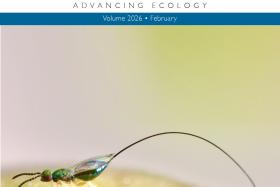
A 27-year, continent-wide study of fig wasps by Souza et al. (2025) shows that communities linked to Neotropical fig trees change dramatically across space, with high species turnover —highlighting how ecological and evolutionary forces shape biodiversity in tightly...
A new study conducted by Gamblin et al. (2025) highlights polar bears as key providers of food in the Arctic, showing that the carrion from their seal kills fuels a network of scavengers and transfers large amounts of energy across marine and terrestrial ecosystems...
A study of carnivores in California’s Sierra Nevada, by Martin et al. (2025), shows that species like bobcats, cougars, coyotes, gray foxes, and martens largely avoid each other in space but share surprisingly similar diets—revealing how landscape conditions shape...
A study of European beech forests, by Rodríguez-Uña et al. (2025) reveals that trees can maintain water uptake during drought by drawing from deeper soil layers, but dry conditions reduce the diversity of their root-associated fungi—threatening vital ecosystem...
A long-term study of mouse lemurs conducted by Vallejo-Vargas et al. (2025) in Madagascar shows that protected forests significantly boost survival compared to degraded habitats. Their paper, titled "Effects of management strategies on the survival probability of a...